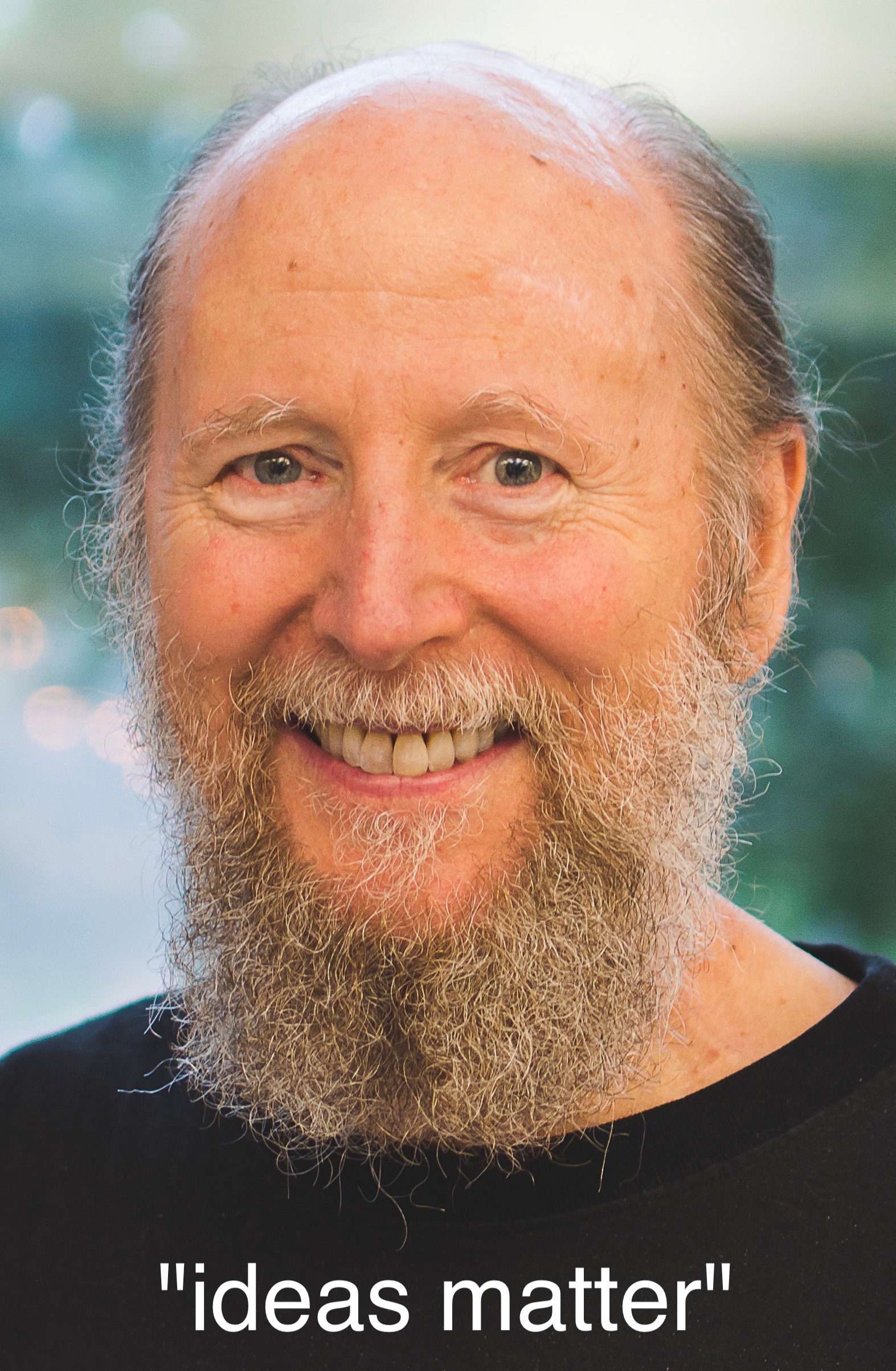
My life is devoted to understanding the simple general principles that I believe underlie both natural and artificial intelligence, and to sharing these principles with the world. Such lofty intellectual goals are usually pursued in academia and corporate research labs, but today there are other possibilities. Today most of my research is conducted at Oak Lab, a small startup company I founded with Khurram Javed in June 2026. Meanwhile, most of my sharing is via speaking, teaching and mentoring at the University of Alberta, where I am a quarter-time professor of computing science, and at the Openmind Research Institute, where I am pro-bono chief scientist. I also advise or work with other for-profit companies, including Tashan, ExperienceFlow, Cisco, Equilibre, Intrepid, Artificial Agency, and Nirvanic. All these roles are synergistic to my goal of promoting the understanding of intelligence.
In particular, as part of Openmind, I am working with Tashan Technologies and other robotics companies in China to create a new kind of robotics lab, a "robot kindergarten", where robots can learn about their bodies and worlds through trial and error. The kindergarten, in Beijing, is one of my favorite places for understanding intelligence via the Alberta Plan for AI Research and the Oak Architecture. I also explore the application of these ideas in commercial enterprises with ExperienceFlow.ai, as founder and chief advisor of their SuperIntelligence Research Lab in Edmonton.
For AI scientists to have such a mix of for-profit and non-profit relationships is not uncommon today. To prevent conflicts of interest, some care and principles are needed. The most important principle is that the ideas and information gained in confidence from one company must not leak to other companies or into the public domain. This applies in particular to the ideas one creates while working for a company, such as the algorithms I develop at Oak Lab. On the other hand, ideas created while working for a non-profit organization, such as at Openmind or at the University of Alberta, typically should be published and shared widely.
In the long run, it is not possible or desirable to be secretive about AI inventions; ideas want to be free, and that freedom maximizes the benefits to all. But, for a time, control and ownership should reside with the inventors so that they can return value to their investors. (This is what I do at Oak Lab.) In this way the funding for research can be sustained, and we can continue our civilization's long arc of innovation and increasing understanding of itself and of the universe.

 IJ, Technoserve, Drug Policy Alliance,
Antiwar, Downsize DC
IJ, Technoserve, Drug Policy Alliance,
Antiwar, Downsize DC